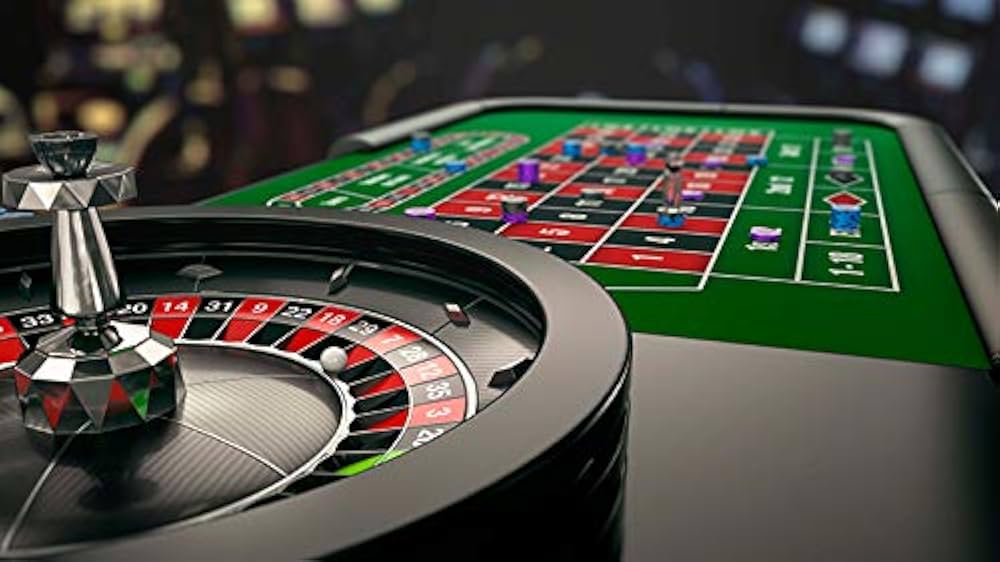

Online slot games are built around one core principle: randomness. Every spin is designed to produce an unpredictable result so that no player can know or control what will happen next. This randomness is what ensures fairness in digital casino environments and allows slot games to function consistently across thousands of players.
People exploring online casino platforms and communities such as Calon4D often notice that slot games appear to behave unpredictably. Sometimes wins occur in quick succession, while other times many spins pass without a reward. These patterns are not controlled by players or casinos in real time. Instead, they are the result of sophisticated randomization systems that operate behind the scenes.
Modern slot randomization relies on advanced software algorithms, probability models, and continuous number generation to determine outcomes instantly when the spin button is pressed.
The Foundation of Randomness in Online Slots
Randomization in slot games is primarily managed by a system known as a Random Number Generator, often abbreviated as RNG.
What Is a Random Number Generator?
A random number generator is a computer algorithm that continuously produces sequences of numbers at extremely high speeds. These numbers correspond to specific positions on the slot reels.
The moment a player presses the spin button, the game captures one of these numbers and translates it into the final reel outcome.
For players browsing slot games on platforms such as Calon4D, the spinning animation they see is only a visual representation. The actual result of the spin has already been determined by the RNG at the moment the spin begins.
Continuous Operation of RNG Systems
The RNG does not start generating numbers when the player clicks spin. Instead, it runs continuously in the background.
This means that:
- The system generates numbers even when nobody is playing.
- The sequence constantly changes.
- The outcome of each spin is independent from the previous one.
Because of this continuous process, predicting the result of a spin becomes impossible.
How Random Numbers Translate Into Reel Results
While the RNG generates numbers, the slot game must convert those numbers into visible symbols on the screen.
Virtual Reel Mapping
Each slot game contains virtual reels, which are lists of symbol positions stored in the game’s software. These lists are often much longer than the physical reels that players see on the screen.
For example, a reel that visually displays three symbols may actually contain dozens or even hundreds of possible symbol positions.
When the RNG selects a number, that number corresponds to one of the positions on the virtual reel.
Players exploring slot libraries on platforms like Calon4D may not see this internal structure, but it is essential for controlling how symbols appear during gameplay.
Symbol Distribution and Probability
Not every symbol appears equally on the reels. Developers control the probability of each symbol by placing it a specific number of times within the virtual reel structure.
For instance:
- Common symbols may appear many times.
- Rare symbols appear only a few times.
This distribution helps determine how frequently certain outcomes occur.
Independent Spins and Probability
One of the most important aspects of slot randomization is that each spin is independent.
No Memory Between Spins
Slot games do not remember previous results. The outcome of the next spin does not depend on:
- Previous wins
- Previous losses
- Time spent playing
- Number of spins performed
Every spin starts with a fresh RNG result.
Players browsing slot games on platforms such as Calon4D may sometimes believe that a machine is “due” for a win, but in reality, the probability resets every time the reels spin.
Randomness and Streaks
Because of probability, players may sometimes experience streaks of wins or losses. These patterns can occur naturally even in completely random systems.
For example:
- A player may win several times in a short period.
- Another player may experience a long series of non-winning spins.
These fluctuations are a normal part of random probability.
The Role of Return to Player (RTP)
Although outcomes are random, slot games are designed around mathematical models that define their long-term payout behavior.
What RTP Represents
Return to Player (RTP) is a percentage that represents how much of the total wagered money a slot game is expected to return to players over a very large number of spins.
For example, a slot with a 96% RTP theoretically returns 96 credits for every 100 credits wagered over the long term.
This does not mean that every player will experience this exact return.
Players exploring slot titles on platforms such as Calon4D may encounter different RTP values depending on the game.
RTP and Randomness
RTP does not interfere with randomness. Instead, it defines the statistical framework within which random outcomes occur.
Individual sessions can produce results that differ significantly from the RTP value because randomness still determines each spin.
How Developers Balance Random Outcomes
Slot developers must carefully design randomization systems to ensure that gameplay remains fair while also maintaining engaging experiences.
Symbol Weighting
Symbol weighting is used to control how often different symbols appear.
For example:
- Low-value symbols may appear frequently.
- High-value symbols appear less often.
This approach allows developers to create balanced reward systems.
Feature Trigger Probability
Bonus features such as free spins or mini-games are also controlled by probability.
These features activate when certain symbol combinations appear on the reels, which is determined by the RNG and symbol distribution.
Players browsing slot collections on platforms like Calon4D often notice that bonus features appear occasionally rather than on every spin due to this design.
Testing and Certification of Random Systems
Before a slot game is released, its randomization system undergoes extensive testing.
Independent Testing Laboratories
Many slot games are evaluated by independent testing organizations that verify the integrity of the RNG system.
These organizations run large-scale simulations to confirm that the outcomes behave according to the game’s mathematical design.
Large Simulation Runs
Testing laboratories often simulate millions of spins to evaluate:
- Randomness quality
- Feature trigger frequency
- Payout distribution
- System stability
This ensures that the slot game operates as intended.
Players exploring slot platforms such as Calon4D ultimately interact with games that have undergone these rigorous verification processes.
Randomization and Player Perception
Even though slot games are mathematically random, players often interpret patterns within their results.
The Human Pattern-Seeking Tendency
Humans naturally look for patterns in events. This can lead players to believe that certain machines are “hot” or “cold.”
However, because of the independent RNG system, these perceived patterns do not influence future spins.
Entertainment Value of Randomness
Randomness is what keeps slot games exciting. Because outcomes cannot be predicted, each spin carries a sense of anticipation.
This unpredictability is a key part of why slot games remain popular in online casino environments.
Players exploring slot titles on platforms such as Calon4D often experience this dynamic gameplay rhythm where each spin represents a new and completely independent random event generated by the slot’s underlying algorithmic system.