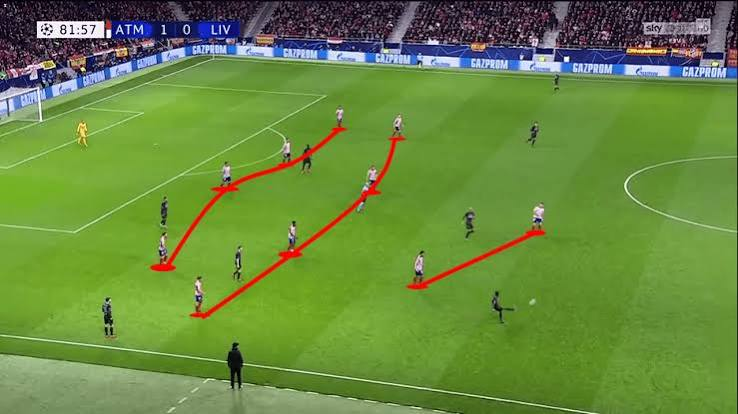

Assessing low-block counter-attacking sides requires looking past conventional possession dominance to evaluate spatial denial and transition efficiency. In the 2019/20 Ligue 1 season, several well-drilled mid-table and lower-tier outfits conceded territorial control intentionally, compressing central spaces in their defensive third and releasing explosive vertical transitions into vacant opponent half-spaces. Bettors who understood the mechanics of these structural setups consistently captured significant odds advantages on Asian handicaps and underdog moneylines by exploiting standard market models that artificially overvalued raw ball possession.
Why Public Betting Bias Inflates Lines Against Low-Block Systems
General betting behavior tends to equate high possession share and frequent territory entry with offensive superiority and eventual match victory. In French football, possession-heavy favorites routinely dominated ball circulation without generating high-probability chances against organized defensive shells. Because public money overwhelmingly backs attacking household names, bookmakers systematically shaded point spreads and moneyline prices toward favorites, creating inflated plus-handicap value on resilient defensive underdogs.
Comparing how distinct low-block setups translated defensive compactness into market cover efficiency illustrates the recurring pricing edge:
| Club Profile | Primary System | Average Possession | Deep Box Concessions / Match | Handicap Cover Rate (%) | Primary Tactical Transition Trigger |
| Stade de Reims | 4-4-2 Low Block | 42.5% | 0.85 | 64.3% | Central interception followed by direct wide release. |
| Stade Rennais | 4-3-3 Mid-to-Low Block | 48.2% | 1.10 | 60.7% | Midfield tackle triggering isolated wide-winger breakaways. |
| Angers SCO | 4-1-4-1 Deep Shell | 45.0% | 1.25 | 57.1% | Second-ball recovery and physical forward target link-up. |
| Nîmes Olympique | 4-4-2 Aggressive Low | 44.1% | 1.65 | 42.8% | High foul count disrupting flow, vulnerable to late box fatigue. |
The recorded performance metrics demonstrate that teams pairing disciplined spatial containment with low deep-box concessions consistently beat bookmaker spread expectations. Outfits allowing fewer than 1.3 high-threat box entries per match provided a durable foundation for backing positive handicap cushions across varied venue conditions.
The Biomechanics of Spatial Denial and Low-Block Execution
A successful low block relies on disciplined horizontal and vertical distances between the defensive back four and the midfield line. In Ligue 1, teams executing this strategy kept their lines within thirty vertical meters, entirely removing the half-space pockets where elite playmakers normally operate. By congesting the penalty arc, the defending side forced attacking favorites to circulate possession harmlessly along the perimeter, drastically reducing shot conversion quality.
Structural Phases of the Counter-Attacking Transition
The transformation from defensive containment to high-threat scoring opportunity unfolds through three deliberate tactical phases:
- Zonal funneling: Central midfielders guide opposing ball-carriers toward touchlines, preventing direct penetration into central shooting zones.
- Targeted transition triggers: Committing two ball-winners to the tackle upon a predictable wide pass forces an immediate turnover.
- Direct vertical release: A single progressive pass bypasses the opponent’s advanced midfield line, launching pace-oriented wingers into 40 meters of open pitch.
These sequential movements explain how a side with only 35% possession can generate higher expected goal efficiency than an opponent maintaining continuous territorial presence.
Sourcing Positive Pricing Through Asian Handicap Spreads
The most practical method for monetizing low-block durability is targeting positive Asian handicap spreads (+0.75, +1.0, +1.25) rather than relying on outright upset victories. In low-scoring competitions like Ligue 1, receiving a full-goal buffer against a possession-heavy favorite provides strong mathematical protection against narrow one-goal defeats while delivering complete payouts on draws and outright wins.
Capitalizing on these price discrepancies requires evaluating market movements where opening spreads fail to match tactical reality. Considering how early lines adjust across an interactive betting interface, real-time data logs on สล็อต ufa168 demonstrate that high-profile favorites frequently saw their handicap lines pushed past realistic margins by late public volume, presenting seasoned market participants with optimal opportunities to secure positive spread value on defensively sound underdogs.
Identifying Severe Stylistic Mismatches Against Slow Possession Favorites
Not all favorites struggle equally against deep blocks; the greatest vulnerability occurs against teams that play high defensive lines without maintaining active counter-pressing intensity. When a possession-heavy team commits both fullbacks forward but lacks athletic central midfielders to recover on turnovers, a counter-attacking underdog finds massive transitional lanes. Identifying this structural mismatch before kickoff allows analysts to anticipate matches where the favorite will be repeatedly exposed on vertical breakaways.
Disciplined bankroll execution across distinct wagering verticals requires isolating repeatable structural rules from superficial appearances. Similar to how strategic players analyze structural math and house rules inside a regulated casino online, sports bettors must deconstruct whether a favorite has the tactical tools to penetrate a deep block or is merely circulating low-threat possession outside the penalty area.
Situational Factors That Weaken Deep-Block Viability
Backing deep-block setups becomes dangerous when specific match conditions compromise defensive integrity early in the contest. Conceding a goal within the opening fifteen minutes destroys the strategic foundation of a low block, as the trailing side is forced to push lines forward and abandon their compact shape. Furthermore, severe central defensive injuries or refereeing assignments known for high penalty awards significantly elevate the volatility of low-block game plans.
Summary
Backing low-block counter-attacking teams in the 2019/20 Ligue 1 season provided a consistent betting edge by exploiting market overvaluation of ball possession. Outfits that maintained rigid spatial compactness, limited deep box entries, and executed rapid vertical transitions regularly covered positive Asian handicap lines against possession-dominant favorites. By diagnosing structural stylistic mismatches, understanding transition mechanics, and screening for early-game failure risks, bettors can systematically capture pricing advantages on disciplined counter-attacking sides.