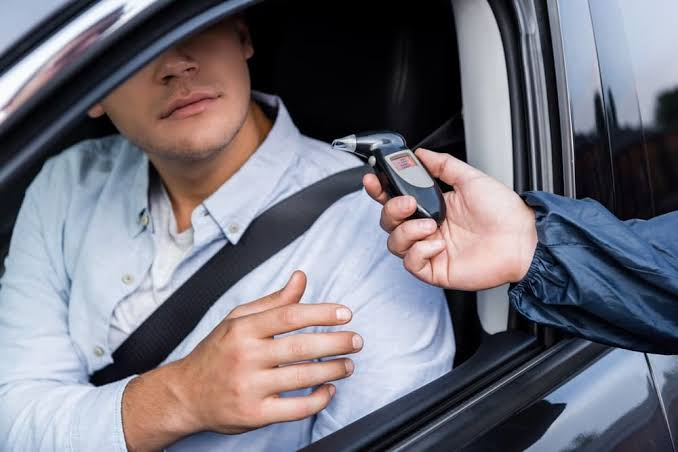

A DUI arrest can be frightening, especially when there was no breath test. Many people assume that police must have a breathalyzer result to charge them with driving under the influence. That is not always true. In Tennessee, a DUI case can involve many forms of evidence, including an officer’s observations, field sobriety tests, statements, driving behavior, video footage, and chemical testing other than a breath test.
If you were arrested for DUI in Nashville without receiving a breath test, you may have important questions. Can you still be convicted? What evidence can prosecutors use? Does the lack of a breathalyzer make the case weaker? What happens if you refused testing? These questions can be difficult to answer without reviewing the specific facts of the traffic stop and arrest.
A Nashville DUI lawyer can examine how the stop began, whether police had reasonable suspicion or probable cause, how the field sobriety tests were performed, what the officer observed, and whether any blood or other chemical test was obtained. Understanding these issues early can help you make informed decisions about your defense.
Can You Be Arrested for DUI Without a Breath Test in Nashville?
Yes. A breath test is not always required for a Tennessee DUI arrest. Tennessee law recognizes different ways that law enforcement may investigate suspected impaired driving. A driver can be arrested when an officer believes there is sufficient evidence to establish probable cause that the person was driving under the influence. A breathalyzer result is only one possible piece of evidence in that process.
For example, an officer may observe a driver weaving between lanes, nearly hitting another vehicle, running a traffic signal, driving at an unusually slow speed, or otherwise operating the vehicle in a way that suggests impairment. After making a traffic stop, the officer may notice additional signs such as slurred speech, poor coordination, an odor associated with alcohol, unusual behavior, or difficulty following instructions.
Police may also ask a driver to perform standardized field sobriety tests. These tests are designed to help officers evaluate physical and mental indicators that may be associated with impairment. The results can become part of the evidence in a DUI prosecution even when no breathalyzer result exists.
The Tennessee Department of Safety explains that Tennessee’s implied consent law applies to chemical testing for alcohol or drugs when law enforcement has reasonable grounds to believe a person was driving under the influence. This does not mean every DUI investigation must produce a breath test.
A DUI arrest and a DUI conviction are also two different things. An arrest means law enforcement believes there is sufficient reason to take the person into custody. A conviction requires the prosecution to prove the offense in court under the applicable legal standard.
This distinction is important in a Nashville DUI case. The absence of a breath test does not automatically dismiss the charge, but it may affect what evidence the prosecution has available and how that evidence should be challenged.
What Evidence Can Prosecutors Use Without a Breathalyzer?
When there is no breathalyzer result, prosecutors may rely on other evidence to support a DUI charge. The exact evidence varies from case to case. A Nashville DUI lawyer will normally look closely at every part of the investigation instead of focusing only on whether a breath test was administered.
One common source of evidence is the arresting officer’s testimony. The officer may describe the driver’s appearance, speech, movements, driving pattern, responses to questions, and performance during field sobriety testing. Prosecutors may argue that these observations show the driver was impaired.
Dashcam, body-camera, surveillance, and police-car video can also become important. Video evidence may support the officer’s account, but it can sometimes reveal details that are less favorable to the prosecution. For example, video may show that a driver followed instructions correctly, that field sobriety tests were conducted on an unsuitable surface, or that the officer’s written report does not fully match what happened.
Field sobriety tests may also be presented as evidence. These tests can include evaluations involving eye movement, walking and turning, and standing on one leg. However, many factors can affect performance. Weather, road conditions, footwear, lighting, physical limitations, nervousness, age, fatigue, and communication problems can all matter when evaluating the reliability of a roadside test.
Statements made by the driver may be another part of the prosecution’s case. Officers may ask questions about where the driver has been, whether the driver consumed alcohol, when the driver last drank, or whether the driver used medication or other substances. A Nashville DUI lawyer can review the exact circumstances in which those statements were made and whether they were accurately recorded or reported.
Blood testing can also be relevant. Tennessee law provides circumstances in which blood testing may be conducted through consent, a warrant, or other legally recognized circumstances. The Tennessee General Assembly has described situations involving blood testing, search warrants, and implied-consent procedures in its DUI legislation.
A prosecutor may therefore have a case without a breathalyzer. However, every piece of evidence must still be examined for reliability, admissibility, and legal sufficiency. A missing breath test can change the nature of the case, particularly when other evidence is weak or inconsistent.
Does No Breath Test Make a DUI Case Weaker?
The lack of a breath test can make a DUI case different, but it does not automatically make the case weak or guarantee a dismissal. The impact depends on what other evidence exists and how strong that evidence is.
In some cases, a breathalyzer result gives prosecutors a clear chemical measurement of alcohol concentration. Without that result, the state may need to rely more heavily on circumstantial evidence and the officer’s observations. That can create additional issues for the defense to investigate.
For example, suppose an officer claims that a driver appeared impaired but the dashcam video shows normal driving, clear speech, and reasonable coordination. If there is also no breath test or blood test, the defense may have more opportunities to question the prosecution’s theory.
On the other hand, a case could contain strong evidence even without a breath test. A serious crash, admissions about alcohol consumption, video footage, multiple witnesses, poor driving, and other observations could provide substantial evidence for the prosecution.
The key question is not simply, “Was there a breath test?” The more important question is, “What evidence does the state have, and was it legally obtained and reliably interpreted?”
This is where an experienced Nashville DUI lawyer can be valuable. A lawyer can review the police report, video recordings, dispatch information, witness statements, field sobriety testing, chemical testing records, and other available evidence. The lawyer may also investigate whether the officer had a lawful reason to stop the vehicle and whether the investigation developed probable cause for an arrest.
The legality of the traffic stop can matter greatly. If police stopped a vehicle without the required legal justification, questions may arise about evidence obtained after the stop. Similarly, if an arrest or search lacked the required legal basis, the defense may have grounds to challenge certain evidence.
Another important issue is the difference between alcohol impairment and alcohol concentration. Tennessee DUI law does not depend exclusively on a breathalyzer number. The prosecution can use other evidence to argue that a person’s ability to safely operate a vehicle was impaired.
That means a driver should not assume that a no-breath-test DUI will disappear. At the same time, the driver should not assume that an arrest automatically means the prosecution has a strong case. The facts need to be evaluated carefully.
What Happens If You Refused a Breath Test?
Refusing a breath test can create a separate legal issue from the underlying DUI charge. Tennessee has an implied consent system. The state’s driver information materials explain that operating a motor vehicle in Tennessee carries implied consent to certain testing for alcohol or drugs when the legal requirements are met.
A refusal can therefore have consequences even if there is no breath test result. The consequences can involve the driver’s license and an implied-consent proceeding, depending on the circumstances and applicable law.
Recent Tennessee legislation has also changed aspects of implied-consent consequences. For example, a 2025 legislative amendment addressed license revocation periods and other rules concerning refusals, including changes effective January 1, 2026, in certain circumstances. Because Tennessee DUI and implied-consent rules can change, anyone facing a current charge should have the specific circumstances reviewed under the law applicable to the date of the incident.
It is also important to understand that refusing a chemical test and being guilty of DUI are not necessarily the same issue. A person may face consequences for refusing testing while also defending the underlying DUI charge.
Likewise, agreeing to a test does not automatically mean a person is guilty. Chemical testing has its own legal and scientific issues. Questions can arise about how a sample was collected, stored, tested, and documented. With blood testing, for example, chain of custody and laboratory procedures may become important.
A Nashville DUI lawyer can also examine whether police properly explained the consequences of refusing a test and whether the testing request followed Tennessee law. The precise facts matter, including whether the person was arrested, what type of test was requested, what warnings were provided, and what happened afterward.
Drivers should also avoid assuming that refusing a breath test is always a better or worse choice. The legal consequences can depend on the circumstances, and decisions involving chemical testing can have both criminal and driver’s-license implications.
If you have already been arrested, the most useful step is generally to preserve information about what happened. Write down what you remember about the stop, arrest, questions, field sobriety testing, chemical testing, and transportation to the police station while the details are still fresh. Do not alter or destroy potential evidence, and avoid discussing the facts of the case publicly.
How a Nashville DUI Lawyer Can Build a Defense
A DUI defense begins with understanding exactly how the arrest happened. A Nashville DUI lawyer may start by reviewing the reason for the traffic stop. Officers generally need a lawful basis to initiate a traffic stop, and the circumstances leading to the stop can become an important part of the defense.
The next step may involve examining the officer’s observations. Reports sometimes contain conclusions that need to be compared with video, witness accounts, dispatch records, and other evidence. A lawyer can look for inconsistencies between what was written in the report and what actually occurred.
Field sobriety testing deserves careful review as well. These tests are not performed in a laboratory. They happen in real-world conditions where surfaces may be uneven, weather may be poor, traffic may be distracting, and a person may be nervous. The officer’s instructions and the driver’s ability to understand them can also matter.
A defense lawyer may also investigate medical or physical factors that could affect performance. A person with an injury, balance problem, mobility limitation, or other condition may have difficulty performing a roadside test without being intoxicated. That does not automatically defeat a DUI charge, but it may provide important context.
Video evidence can be especially valuable in a no-breath-test case. Body-camera footage may show the driver’s behavior before, during, and after the field sobriety tests. Vehicle cameras can provide evidence about driving behavior. Nearby businesses or homes may also have surveillance footage, although such footage may not remain available indefinitely.
The lawyer can also examine whether statements were accurately recorded. Small differences can matter. Saying that a person consumed one drink at dinner is not the same as admitting to being impaired. A report that summarizes a conversation may not capture the exact words used.
If a blood test was performed, the defense can investigate the testing process. This can include examining collection procedures, laboratory records, chain-of-custody documentation, and the qualifications of people involved in testing. The goal is not to assume that testing was wrong but to determine whether the evidence is reliable and legally admissible.
A Nashville DUI lawyer may also consider whether certain evidence should be challenged in court. Suppression issues can arise when evidence was obtained through an unlawful stop, search, seizure, or other constitutional violation. Whether such a challenge is appropriate depends on the specific facts and applicable Tennessee law.
Finally, the defense strategy should reflect the person’s actual situation. A first DUI case may involve different considerations than a repeat DUI charge. A case involving a collision may require a different approach from a case involving a routine traffic stop. Prior convictions, injuries, chemical testing, refusal issues, and other factors can all affect the legal strategy.
The most important point is that a missing breath test does not tell the whole story. It is one part of a much larger DUI investigation. The strength of the case depends on the complete record.
Conclusion
Being arrested for DUI without a breath test does not automatically mean the charge will be dismissed, and it does not automatically mean the prosecution has enough evidence to obtain a conviction. Tennessee DUI cases can rely on many forms of evidence, including officer observations, field sobriety tests, statements, video recordings, driving behavior, and blood or other chemical testing.
If you are facing a DUI charge in Nashville, it is important to understand both the criminal case and any driver’s-license consequences that may result from an alleged testing refusal. Tennessee’s implied-consent rules can create separate issues that deserve careful attention.
A Nashville DUI lawyer can review the circumstances of your traffic stop, arrest, testing, and evidence to identify possible defenses and legal problems in the prosecution’s case. Because DUI law can change and every arrest is different, getting case-specific legal advice is important. The sooner the evidence is reviewed, the better positioned you may be to understand your options and protect your rights.