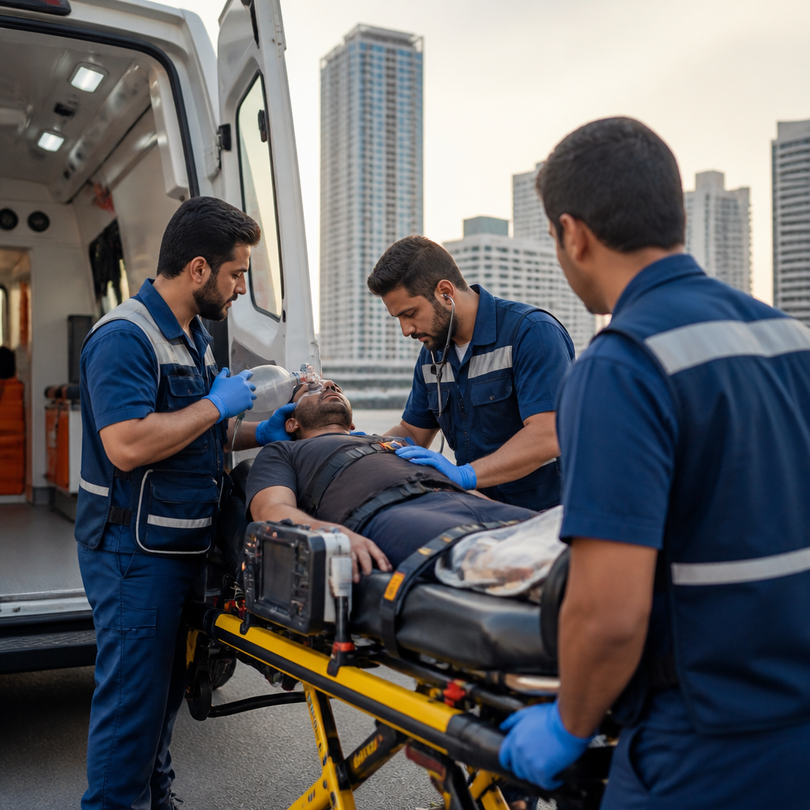

Rapid urbanization in the Gulf region has created unique challenges for healthcare delivery. As cities expand and populations grow, the infrastructure supporting both emergency response and specialized medical care must evolve in parallel. This relationship between frontline emergency services and tertiary hospital care determines how effectively communities can respond to health crises ranging from acute emergencies to chronic conditions requiring specialist intervention.
The connection between these two levels of care is more direct than many realize. Emergency responders trained to recognize early warning signs of serious conditions create a crucial bridge to definitive treatment. Meanwhile, the availability of specialized medical services influences how emergency protocols are designed and what stabilization measures responders can undertake before hospital arrival.
The Foundation of Emergency Response Systems
Emergency medical training establishes the baseline competency for first response across diverse settings. Certification programs prepare individuals to manage cardiac events, trauma, respiratory distress, and other time-sensitive conditions. The quality and standardization of this training directly affects patient outcomes, particularly in the critical minutes before hospital care begins.
In densely populated urban centers, response times become a key metric. Studies consistently show that survival rates for cardiac arrest drop by seven to ten percent with each minute of delay. This reality drives investment in distributed emergency response capabilities, from lifeguard stations at public beaches to workplace first aid programs. The coordination between these community-based responders and hospital emergency departments creates a continuum of care that can mean the difference between recovery and permanent injury.
Training standards also need to account for regional health patterns. Areas with high rates of heat-related illness require responders skilled in recognizing and treating hyperthermia. Coastal cities must prepare for drowning incidents and marine injuries. These regional lifeguard course demographic safety systems and local placement considerations ensure that emergency response capabilities match the actual risks communities face.
Specialized Care Access in Multi-Specialty Hospitals
While emergency response provides immediate stabilization, many conditions require ongoing specialist care. Multi-specialty hospitals serve as the anchor institutions for comprehensive medical treatment, offering everything from diagnostic imaging to complex surgical procedures. The presence of these facilities in a city fundamentally changes what level of care emergency responders can promise to patients.
Different medical disciplines require varying levels of urgency. Cardiovascular emergencies demand immediate intervention, often within a narrow therapeutic window. Neurological events such as strokes benefit from rapid treatment to minimize permanent damage. Other conditions, while serious, allow more time for careful evaluation and treatment planning. The architecture of healthcare access must accommodate this spectrum of urgency.
The Role of Digestive Health Services
Gastrointestinal conditions represent a substantial portion of both emergency and planned medical care. Acute presentations can include severe abdominal pain, gastrointestinal bleeding, or complications from chronic digestive disorders. These situations often require immediate assessment to rule out life-threatening conditions while determining the appropriate level of intervention.
For patients experiencing persistent digestive symptoms or diagnosed conditions requiring ongoing management, access to specialized care becomes essential. Facilities offering comprehensive digestive disease programs provide endoscopic procedures, motility studies, and advanced imaging that allow for accurate diagnosis and treatment planning. When emergency responders transport a patient with acute gastrointestinal symptoms, they rely on the availability of specialists who can perform urgent endoscopy if needed or coordinate admission for observation and treatment. Patients seeking this level of expertise can consult with a gastroenterologist at facilities equipped to handle both routine and complex digestive health concerns.
The integration of gastroenterology services within a multi-specialty hospital also allows for collaboration when digestive symptoms arise as part of broader systemic conditions. Liver disease may require coordination with transplant teams. Inflammatory bowel disease might need input from nutrition specialists and rheumatologists. This collaborative model represents modern healthcare delivery at its most effective.
Healthcare Facility Types and Their Functions
Understanding the different categories of medical facilities helps patients navigate the healthcare system more effectively. Primary care clinics handle routine health maintenance and common acute illnesses. Specialty clinics focus on specific organ systems or disease categories. Hospitals range from community facilities offering essential services to tertiary centers with subspecialty capabilities that handle complex and rare conditions.
Emergency departments serve as the gateway for urgent and unscheduled care. Their design reflects the need to quickly assess, stabilize, and either treat or transfer patients. Some conditions can be fully managed in the emergency setting, while others require admission to inpatient units for ongoing treatment. Still others may be discharged with referrals for outpatient specialist follow-up.
The categorization of types of medical facilities and services varies by healthcare system but generally distinguishes between primary, secondary, and tertiary care levels. This tiered structure allows for efficient resource allocation and ensures that the most complex cases receive appropriate attention from highly specialized teams.
Diagnostic Services as the Bridge Between Care Levels
Advanced diagnostic capabilities determine how quickly physicians can move from symptom recognition to definitive treatment. Imaging services including CT, MRI, and ultrasound provide internal visualization without invasive procedures. Laboratory testing reveals biochemical markers that confirm or rule out specific conditions. Endoscopic procedures allow direct examination of internal structures while enabling therapeutic interventions.
The availability of 24-hour diagnostic services changes what emergency departments can accomplish. A patient presenting with chest pain can receive cardiac enzyme testing and imaging within minutes, allowing rapid differentiation between life-threatening cardiac events and less serious causes. Similarly, abdominal pain can be evaluated with imaging to identify appendicitis, gallbladder disease, or bowel obstruction, guiding decisions about surgery versus medical management.
Diagnostic capability also affects outpatient care pathways. When patients can receive comprehensive testing at a single location, the time from initial consultation to treatment plan shortens considerably. This convenience factor particularly matters for patients managing chronic conditions requiring regular monitoring.
Building Coordinated Healthcare Networks
The most effective healthcare systems operate as integrated networks rather than collections of independent facilities. Electronic medical records allow information sharing across care settings. Standardized protocols ensure consistent treatment approaches. Transfer agreements between facilities enable patients to move seamlessly to the appropriate level of care as their needs change.
In practice, this coordination begins before emergency responders even reach a patient. Dispatch systems can alert receiving hospitals about incoming cases, allowing preparation of necessary teams and resources. Paramedics communicate assessment findings and vital signs during transport, enabling emergency department staff to formulate initial treatment plans. Upon arrival, established protocols guide rapid triage and treatment initiation.
For planned care, coordination looks different but remains equally important. Primary care physicians refer patients to appropriate specialists based on symptoms and initial findings. Specialists communicate back to referring physicians about diagnoses and treatment plans. Pharmacies receive prescriptions electronically and can flag potential drug interactions. This web of communication reduces errors and improves efficiency.
Patient Navigation Through Complex Systems
Even well-designed healthcare systems can overwhelm patients unfamiliar with medical terminology and institutional procedures. Clear information about when to seek emergency care versus scheduling appointments with specialists helps patients make appropriate decisions. Understanding what to expect during diagnostic procedures reduces anxiety and improves cooperation. Knowing how to access test results and follow-up instructions increases adherence to treatment plans.
Language access represents another crucial element, particularly in diverse international cities. Medical interpretation services ensure that patients can communicate symptoms accurately and understand treatment recommendations. Written materials in multiple languages support informed consent and self-care instructions. Cultural competency training helps healthcare workers recognize how different backgrounds influence health beliefs and care preferences.
The physical design of healthcare facilities also affects patient experience. Clear signage reduces confusion and stress. Comfortable waiting areas acknowledge that healthcare often involves delays. Private consultation spaces protect patient dignity and confidentiality. These environmental factors may seem secondary to clinical capability but significantly influence whether patients feel respected and supported during vulnerable moments.
Looking Forward: Healthcare Infrastructure Investment
As cities continue growing, healthcare planning must anticipate future needs rather than simply reacting to current demand. Population projections inform decisions about where to locate new facilities and what services they should offer. Disease trend analysis reveals which specialties will face increased demand. Technology assessment identifies which diagnostic and treatment capabilities will become standard expectations.
Emergency response infrastructure requires ongoing investment as urban footprints expand. New residential and commercial districts need strategically positioned response stations. Training programs must scale to supply adequate numbers of qualified personnel. Equipment and vehicles require regular replacement and upgrading as technology advances and response protocols evolve.
Hospital capacity planning faces similar challenges. Operating room availability, intensive care beds, and specialist staffing all require careful forecasting. Overbuilding creates financial waste, while underbuilding forces rationing and delays. The balance depends on accurate data about population health status, utilization patterns, and emerging treatment modalities that might shift care from inpatient to outpatient settings.
The relationship between emergency preparedness and specialized medical care will only grow more important as healthcare becomes increasingly sophisticated. Patients benefit when these systems work in concert, creating seamless pathways from initial crisis response through definitive treatment and ongoing management. Communities that invest in both emergency capabilities and comprehensive hospital services position themselves to protect and improve population health across the full spectrum of medical needs.