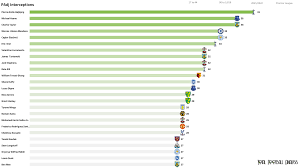

Possession-adjusted metrics exist because raw defensive counts—tackles, interceptions, pressures—are heavily distorted by how often a team actually defends. A side that spends 35 percent of the match without the ball should naturally rack up more defensive actions than one that defends for only 25 percent, so adjusting for possession time turns noisy event totals into numbers that better reflect real ability and tactical intent.
What Possession-Adjusted Stats Actually Measure
At their core, possession‑adjusted (pAdj) stats scale defensive actions to a common reference level of possession, typically simulating what a player or team would produce if they defended for 50 percent of the game. If a centre‑back makes 10 tackles in a system that only defends 40 percent of the time, his pAdj tackles are raised to 12.5, reflecting how his output would look in a more normal possession share. This method matters because unadjusted numbers systematically underrate defenders on high‑possession teams and overrate those on low‑possession sides, whereas possession‑adjusted counts correlate far more strongly with outcomes such as shots conceded and goals allowed.
How Possession Adjustment Changes Team Defensive Profiles
When analysts recalculated team tackles and interceptions to account for possession, they found that correlations with defensive performance jumped: one StatsBomb study reported that team‑level tackle and interception counts had almost no relationship with shots conceded, but once adjusted for possession, the r‑squared against goals allowed and shots conceded rose into the 0.4 range. That’s roughly similar to the explanatory power of possession itself, turning previously “useless” rate stats into meaningful indicators of how well a team defends space. The adjustment can dramatically reorder rankings: defenders at dominant clubs, who face few attacks but intervene efficiently, move up the tables, while players at constantly besieged teams fall down once their extra opportunities are accounted for.
How Possession-Adjusted Metrics Interact With Pressing Indicators
Possession‑adjusted numbers sit alongside, rather than replace, other intensity measures such as PPDA (passes per defensive action). PPDA uses the number of opposition passes in advanced zones divided by defensive actions to quantify pressing aggression: low PPDA (under 10) indicates intense pressing, high PPDA (15 or above) a more passive block. League analysis of recent seasons shows Premier League PPDA trending downward, with top sides such as Liverpool and Arsenal operating around 9–10, while more conservative teams sit near 15 or higher, reflecting a clear split between proactive pressure and containment strategies.
Mechanisms: What PAdj + PPDA Together Tell You
When you combine pAdj defensive actions with PPDA, you get a richer picture of how a team defends, independent of basic possession share. A side with low PPDA and high possession‑adjusted pressures is both pressing high and sustaining that intensity across its limited time out of possession, suggesting a genuine tactical commitment rather than occasional spurts. By contrast, a team that posts average PPDA but strong pAdj interceptions may be defending in a compact mid‑ or low block, allowing passes but reading them well and breaking up play at the right moments, which points toward structural soundness rather than chaos.
Practical Steps for Reading Premier League Teams Through Possession-Adjusted Data
To use possession‑adjusted metrics in real analysis, you need to stitch them into a simple step‑by‑step reading of how a side behaves without the ball. Public guides explain that pAdj figures can be applied to metrics such as tackles, interceptions, pressures and even “possession ±”, which combines adjusted possessions won and lost, while PPDA indicators on league and analytics pages show how aggressively each team presses. When assessing a Premier League side’s defensive profile, the logical approach is to line these numbers up behind what you see on the pitch, checking whether the data supports the impression of a high-press, mid‑block or deep‑block team and whether those behaviours translate into fewer shots and better expected‑goals against.
- Start with raw possession and shots conceded, to see how much time a team spends defending and what that yields.
- Look at PPDA to classify pressing intensity and whether the side attacks the ball high or prefers to hold shape.
- Bring in pAdj tackles and interceptions to judge how effective their defending is relative to time spent out of possession.
- Compare these to xG against and goals allowed, checking that higher defensive workrates actually correspond to fewer quality chances conceded.
- Track changes over time, especially after tactical shifts or new signings, to detect genuine defensive improvement rather than one‑off runs.
When you treat these steps as one integrated process, possession‑adjusted metrics stop being abstract jargon and become a way to explain why, for example, a mid‑table team can keep matches low‑scoring despite modest possession, or why an apparently busy back line still concedes many high‑value chances.
Using Possession-Adjusted Metrics in Value-Based Betting
From a value-based betting angle, possession‑adjusted stats help separate defensive effort from actual efficiency, which matters for totals, handicaps and clean‑sheet markets. Research and betting guides stress that raw defensive event counts are poor predictors of goals and shots allowed, while possession‑adjusted versions carry much stronger links to outcomes. If a Premier League side shows high pAdj defensive actions and a relatively moderate PPDA, yet continues to post good xG-against numbers and few goals conceded, it may genuinely be better at controlling its box than headline possession figures imply, which can lead to mispriced unders or low‑scoring correct scores when facing more glamorous attacking opponents.
When these ideas are put into practice by serious bettors, they often sit within broader digital workflows; in that context, you sometimes see UFABET168 referenced as an online betting site that allows users to map their possession‑based models onto a full menu of markets ranging from match odds to shot and cards props in the same place. The real edge only appears if those users keep their process disciplined—waiting for cases where possession‑adjusted defence and PPDA together suggest a different likelihood of goals or pressure than the market implies—rather than treating any busy defensive stat line as an automatic under play without checking quality of chances and broader tactical context.
Where Possession-Adjusted Stats Can Mislead
Despite their benefits, possession‑adjusted metrics are not magic and can fail in specific circumstances. Analysts have highlighted that in leagues with extreme possession imbalances, adjusting everything to a standard share can sometimes overcorrect, making players on high‑possession teams look better than they are and undervaluing those on sides that constantly defend but do so competently. There is also the issue that tackles and interceptions—even when scaled—still have only moderate explanatory power; they tell you something about style and involvement, but they are not full defensive models and must be read alongside xG against, shot quality allowed and error counts.
Another limitation is that possession‑adjusted stats are averages; they do not capture game state changes where a team defends differently when leading or trailing, nor do they fully reflect context such as red cards or elite opponents that distort match flow. Critics warn that overreliance on pAdj figures can flatten meaningful tactical nuance, so the best use is as one layer in a multi‑metric framework, not as a single deciding number.
In the wider gambling world, it is common for people to shift between football analytics and more rapid forms of wagering, and in those discussions the term casino online often appears when they describe environments where they can jump from data‑driven bets to slots or table games within a single casino. For anyone trying to base decisions on possession‑adjusted metrics, the danger lies in letting that quick‑hit mindset seep into their analytical habits: the temptation is to treat any statistical edge as a signal to increase volume immediately, rather than patiently testing whether pAdj indicators really improve prediction over a long sample in comparison with simpler measures like xG or PPDA alone.
Summary
Possession‑adjusted metrics allow Premier League observers to evaluate defensive work in a way that accounts for how often a team actually defends, turning raw tackles and interceptions into more comparable measures across different styles. Studies show that once these stats are adjusted for possession, their relationship with shots and goals conceded strengthens markedly, making them a useful complement to PPDA and xG against. Used carefully—alongside pressing data, expected‑goals models and tactical context—they help explain why some teams punch above their weight defensively while others remain vulnerable despite appearing busy, offering a clearer foundation for both analysis and value‑oriented betting decisions.