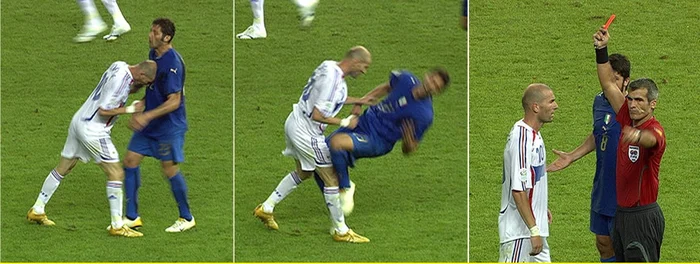

Zinedine Zidane’s World Cup career runs on two unforgettable images: him rising twice to head France past Brazil in the 1998 final, and eight years later walking past the trophy after headbutting Marco Materazzi in Berlin. For viewers who watch full matches rather than just clips, that arc reveals a playmaker whose control of tempo, space, and big moments was matched by a volatile edge that shaped how finals unfolded on the pitch.
Why Zidane’s World Cup Journey Matters for Live Viewers
Zidane played in three World Cups for France, helping them win their first title in 1998 and lead a deep run to the 2006 final, with his performances often defining how France’s games felt to watch. When you rewatch those tournaments, paying attention to his positioning, body orientation, and tempo choices turns each game into a lesson in how a central playmaker can dictate both chance creation and emotional rhythm in knockout football.
1998: How Zidane’s Two Headers Against Brazil Reframed His Role
In the 1998 final at Stade de France, Zidane scored two first-half headers from Emmanuel Petit’s in-swinging corners, becoming the only player to score twice with his head in a World Cup final. For viewers, those goals show not just his aerial timing but how France used set-pieces and crowd energy to assert control against a Brazil side many expected to dominate the ดูบอลโลก 2026 ฟรี, shifting the match’s tactical balance before half-time.
What to Watch in Zidane’s 1998 Final Performance
Beyond the two goals, Zidane’s display against Brazil is a study in space management from an attacking midfielder. In live viewing, watch how he drifts into half-spaces, receives under light pressure, and links play between France’s deeper double pivot and their forwards, turning potentially scrappy transitions into structured attacks that keep Brazil pinned in their own half.
How Zidane Controlled Tempo and Shot Quality for France
Across his World Cup matches, Zidane often acted as France’s metronome, deciding when to speed play up with vertical passes and when to recycle possession to maintain control. When you track his touches, you see that he frequently receives on the half-turn, plays into forwards’ feet or wide runners, and then repositions to offer a safe outlet, increasing the likelihood that France’s eventual shots come from central, well-worked positions rather than rushed, low-xG efforts.
A simple viewing routine for any Zidane World Cup game is:
- Before France advance into the final third, find Zidane’s starting position—between the lines, wide left, or dropping deeper next to the holding midfielder.
- On each reception, note whether he faces forward immediately or uses a first touch to create space and draw a defender out.
- Track the next two passes: does he accelerate the move into a forward’s feet or switch play to the far side to stretch the block.
- Evaluate where the attack ends: is the shot or final pass coming from the zone Zidane first occupied, or from space he has opened by dragging markers away.
- Over 90 minutes, count how many major chances begin with a Zidane touch or movement, even if he does not register the assist.
Seen this way, his influence becomes clearer: he is constantly nudging France’s attack toward higher-probability situations, shaping their xG profile through his decisions on when and where to play.
2006: A Veteran Playmaker Leading France Back to a Final
By 2006, Zidane was nearing retirement, but he remained the central reference point in France’s build-up, guiding them through a difficult early phase into a run that included standout performances against Brazil and Portugal. In those matches, his touches become more economical: fewer long dribbles, more precise passes, and clever body feints that buy just enough time for runners to emerge, which is especially visible if you watch full games rather than highlight compilations.
The 2006 Final: Penalty, Headbutt, and a Match Tilted by Emotion
In the final against Italy, Zidane opened the scoring with a chipped penalty, lifting the ball in off the crossbar in a high-pressure moment that set the tone for a tightly contested game. Over the next 100 minutes, he continued to drift into pockets, combining with wide players and forwards, testing Gianluigi Buffon with a strong header in extra time before the infamous incident that would end his career.
Understanding the Headbutt in Tactical Context
Zidane’s headbutt on Marco Materazzi in extra time—his last act as a professional player—reduced France to ten men in a match that would be decided on penalties. From a viewing standpoint, it not only removed France’s primary playmaker for the final minutes but also altered their structure for the shootout by taking their most experienced penalty taker and emotional leader off the list, factors that matter when interpreting how the final swung Italy’s way.
How Zidane’s Temperament Shaped France’s Game States
Zidane’s World Cup story shows how a playmaker’s temperament can influence game states as much as their passing. In his best moments, his calm under pressure—seen in the 1998 final headers and the 2006 chipped penalty—translates into composure for teammates, while in his worst, as with the headbutt, a flash of anger forces structural and psychological adjustments you can see in France’s body language and decision-making.
For live viewers, this is a reminder to watch not only technical actions but reactions: how often teammates look to Zidane after a setback, how opponents adjust their pressing around him, and how his emotional state—steady or agitated—seems to affect France’s willingness to play through him versus bypassing midfield with longer passes.
Summary
Zinedine Zidane’s World Cup career, from his two headed goals that delivered France’s first title in 1998 to his red-card headbutt in the 2006 final, encapsulates how a single player can shape both the tactical and emotional narratives of the biggest matches. By rewatching his games with an eye on positioning, tempo control, and temperament, you can move beyond iconic moments to understand how he drove France’s structure, chance creation, and game states—and why his highs and lows remain some of the most studied chapters in World Cup history.